The short answer
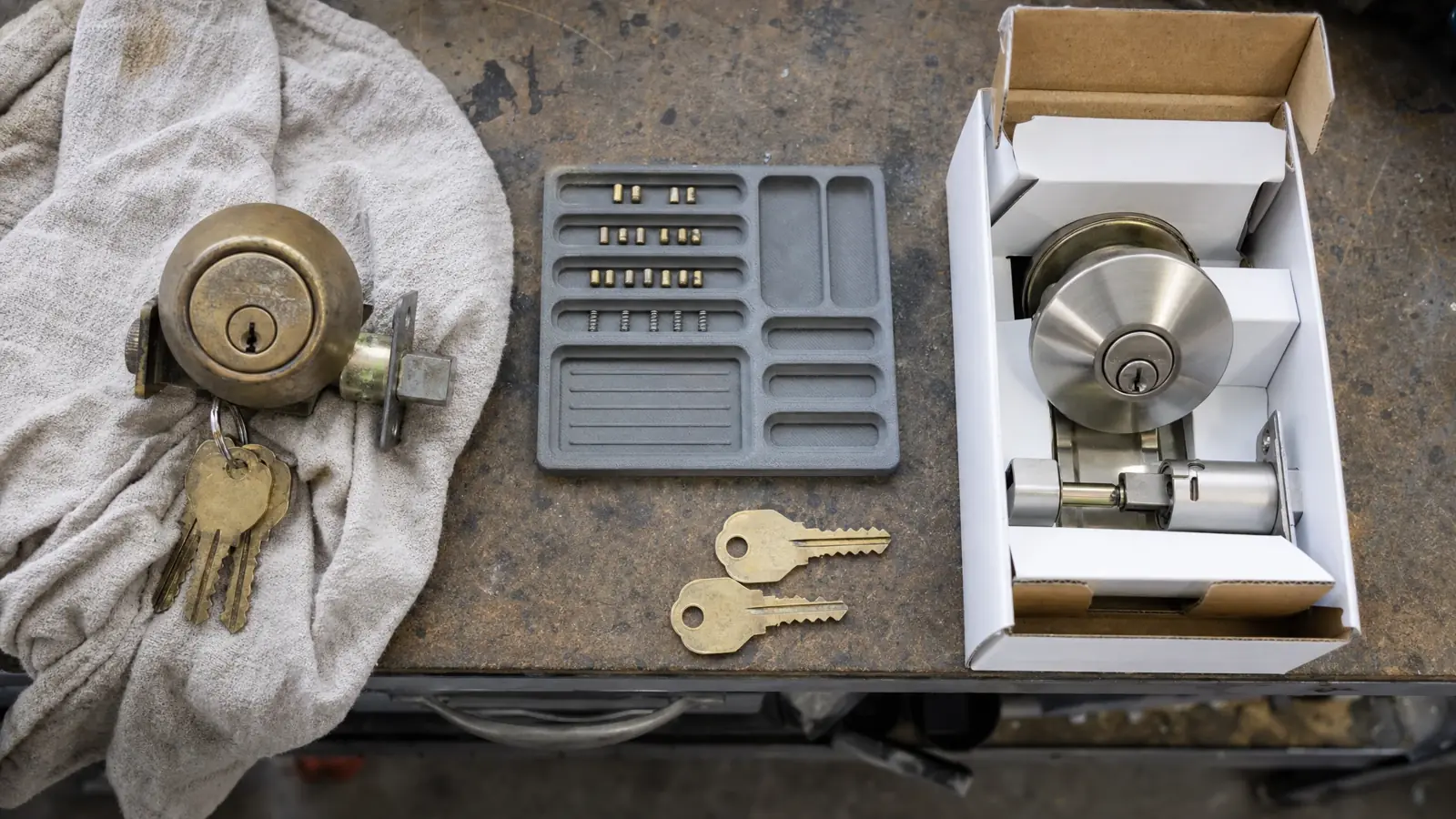
Rekey unless the lock is worn out, was never any good, or has to do something it cannot do. That covers the overwhelming majority of San Jose houses. Rekeying takes the cylinder apart, swaps the small pins inside for a set matching a new key, and puts it back on the door looking exactly as it did — every key that existed before stops working the moment that happens. It costs $26 to $42 per cylinder, and the $89 service call is on the visit rather than on each lock, which is why the door count is taken on the phone.
Replacement costs $115 to $295 per door and buys you a different lock, not automatically a safer one. Where it earns its money is a cylinder worn past the point of holding a fresh pinning, builder hardware that was thin when it was new, or a household that needs something the old lock cannot provide — a lever instead of a knob for hands that no longer grip, a thumbturn instead of a key on the inside of a door people need to leave quickly.
For a typical four-door San Jose house — front, back, garage-to-house and a utility door — rekeying the lot lands between $104 and $168 in parts and labour plus the visit. Replacing the same four doors starts around four times that. Both are legitimate spends; only one of them is usually necessary.
When rekeying is the right call
After a purchase, always. The sellers handed over the keys they knew about; the ones cut for a gardener in 2011, a lodger in 2016 and a contractor last spring cannot be recovered by asking, and their number is unknowable. Repinning ends the question in one visit rather than managing it forever. In Cupertino and the busier parts of Willow Glen, where houses turn over quickly, this is the single most common planned job of the year.
At tenant turnover, for the same reason with a shorter timescale. A departing tenant returns the key on the ring, not the copy made for a partner who moved out in March. Rekeying keeps the landlord's hardware on the door, which is what most leases in this city require, and the technician can leave a written line with the cylinder count and figure for a property manager to sign off before anything is touched.
And after any relationship with the house ends badly, or after a lost keyring. If your keys went missing with anything identifying the address on them — a parking permit, a gym tag, a letter in the same bag — that is not a lost-key problem, it is an address problem, and repinning is the cheap end of solving it.
The other request that lands under this heading is combining. Most San Jose houses run two or three different keys for no better reason than that the doors were fitted in different decades. Bringing them onto one key costs the same per cylinder and removes the daily fumble that ends with somebody leaving the side gate unlocked.
When replacement actually makes sense
First: the lock is worn out. The tell is a key that has to be jiggled, or one that turns when it is not quite home. That means the pins no longer find a clean shear line, and a fresh pinning into a worn cylinder is money spent twice. The tract ranches of Cambrian Park and Blossom Valley are the classic case — sixty years of keys have polished the mechanism smooth. A technician who finds one names that door on the day, with the replacement figure beside it.
Second: the hardware was never adequate. A builder-grade deadbolt with a half-inch throw, or a front door running a knob-only entry set with glass beside it, is not made safer by new pins. Neither is the garage-to-house door, which on most houses here is a hollow-core interior leaf on a passage knob — the cheapest genuinely useful upgrade in this whole article is a proper deadbolt and a reinforced strike on that one door.
Third: the household changed. A lever instead of a knob for arthritic hands, a keypad so a carer or a dog walker can come in without a key living under a plant pot, a double-cylinder arrangement where local rules allow it and a sidelight makes a thumbturn reachable through glass. Those are needs, and no amount of repinning meets them.
What does not justify replacement is fashion, and one thing that looks like a reason but is not: a door that sticks or a deadbolt that has to be lifted to lock. That is a door which has dropped on its hinges or a strike that has moved, and a new lock into the same misaligned strike will behave exactly like the old one.
The part of the job nobody quotes for
Whichever you choose, the strike is what decides whether it matters. Burglars in this city do not pick locks; they kick strikes. The plate that came in the box is held by two three-quarter-inch screws into soft trim, and what fails under a shoulder is the jamb around it, not the bolt. The fix costs almost nothing at the time of any other visit: a box strike on three-inch screws that reach the stud behind the frame.
The second thing is square. A house that has settled — and most San Jose houses built before 1975 have — carries a jamb that is no longer true, so a bolt that seems to throw is actually catching on the edge of the mortise. Repositioning the strike and deepening the mortise until the bolt travels its full length is ten minutes of work and it is the difference between a lock that resists and a lock that looks like it does.
This is also why a smart lock goes onto a door that has been checked first. A motor cannot force a bolt that a hand has been forcing, and a keypad fitted to a binding door fails in the first cold week of December, which is exactly when everybody blames the software.
Getting a straight price before anyone drives over
Count the cylinders before you ring: front, back, garage-to-house, utility, side gate, and any interior door with a lock on it. That count is the whole quote. A rekey visit priced from a door count on the phone arrives as one figure; a rekey visit priced at the kerb arrives as a discovery per door, which is the same trick as the $19 advert wearing different clothes.
Ask for the old pins back. It sounds like a strange request and it is the single best proof that a cylinder was actually opened, rather than a new key being cut to the lock you already had. Ask how many keys come with the work — two is normal, and more should be a couple of dollars each on the same visit rather than a trip to a kiosk. And if the technician tells you a particular cylinder should be replaced instead, ask to be shown the wear rather than told about it.
One last thing that saves money later: if you are having any door touched, ask whether the others can be brought onto the same key while the van is there. Doing it in one visit is one service call. Doing it in three visits over a year is three.
Quick answers
How much does it cost to rekey a whole house in San Jose?+
$26 to $42 per cylinder plus the $89 service call, which is inside the figure rather than added per lock. A typical four-door house therefore lands between roughly $190 and $260 all in, quoted on the phone from the door count you give. Extra keys are a couple of dollars each on the same visit.
Does rekeying make my lock less secure than a new one?+
No. The mechanism is unchanged; only the pin combination is different, and every previous key stops working. Security comes from the quality of the lock and the strength of the strike, not from the age of the pins. The exception is a cylinder so worn that a wrong key nearly turns it, and that one wants replacing rather than repinning.
Our landlord will not let us change the locks. Can we still rekey?+
Usually yes, because rekeying leaves the landlord's hardware on the door. Most leases in this city ask only that the landlord receive a working key afterwards, which is easy since keys are cut on the visit. Ask for a written line naming the cylinders and the figure so you can forward it before anything is touched.
Can every door in the house use the same key?+
In most cases, yes, if the locks share a keyway. Where they do not, matching them means replacing one or two cylinders, and you get that figure separately rather than a vague yes. Bring padlocks and gate locks out when the technician arrives; it takes two minutes to know whether they can join the set.
Need it handled instead of read about?
(408) 583-5689