Access Control in San Jose
Keypads, fobs and audit trails.
4.9 / 5· 312 reviews from San Jose & South Bay
custom quote
Typical price
20 min
Avg. arrival
24/7
Availability
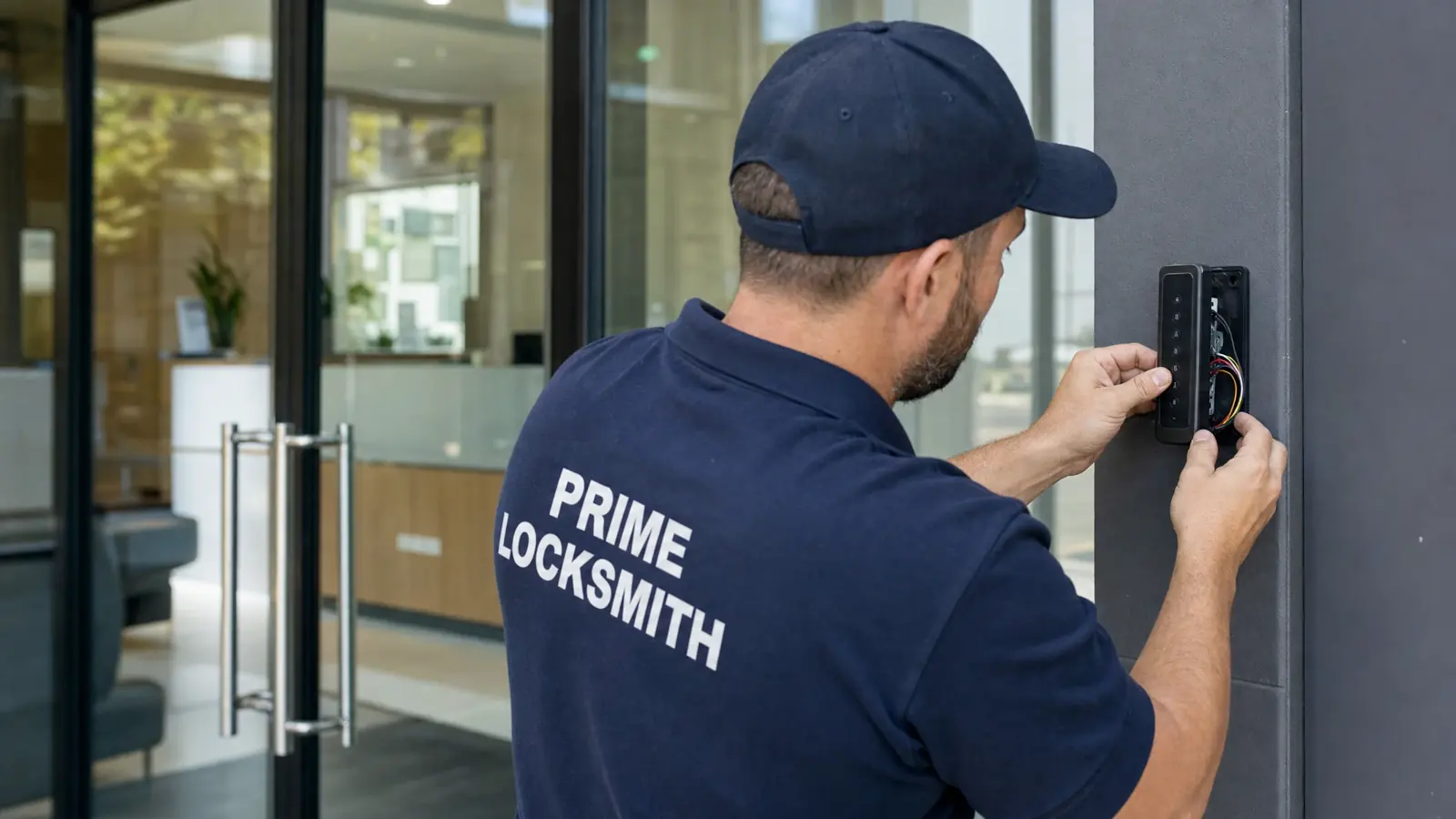
Badges, fobs and codes on the doors that need a record of who came in, with the mechanical lock underneath still making sense
Access control is bought for one of two reasons, and they lead to different systems. The first is revocation: a business with turnover that is tired of repinning cylinders every time somebody leaves, and wants a credential that stops working the same afternoon. The second is the record — knowing which door opened at 03:40 on Sunday and whose badge did it. Offices in the Golden Triangle and North San Jose usually want both. A warehouse yard usually wants the first. A small shop often wants neither and would be better served by a good cylinder and a written key list, which is a thing worth being told before spending four figures on a system.
What actually goes on the door decides how well it ages. A strike release is cheap and suits an interior office door. A maglock holds hard, needs a proper request-to-exit arrangement and has to fail open on fire alarm, which makes it a job to be done properly rather than quickly. Electrified exit devices suit doors that also need panic hardware. Standalone keypad locks with a few dozen codes suit a single door where wiring the building is not worth it. Cloud-managed controllers suit sites where somebody wants to revoke a badge from a phone at the weekend. All of them still sit on a mechanical lock underneath, and the commonest failure in this trade is a beautiful system on a door whose strike was never aligned, so it drifts and the door stops latching by March.
Access control is quoted per job. What the quote covers is named before anything is fitted: the controller or standalone unit, the reader, what happens to the door hardware, the wiring where wiring is needed, the credentials, and the handover. The fire-safety side is not optional and is written into the quote rather than assumed: doors on maglocks release on alarm and have a mechanical way out from the inside, always. Where a site already runs a system that is simply out of date, extending it is usually cheaper than replacing it, and that is checked before a replacement is proposed.
The handover is the part that decides whether you keep liking it. Somebody at your end is shown how to add and remove a credential, not sent a PDF. The mechanical override key is tested and its whereabouts agreed. Battery and power failure behaviour is explained in plain words — what happens to that door when the power goes out is a question worth answering before it happens rather than at seven on a Monday. And the mechanical locks underneath are documented in the same key schedule as the rest of the site, because the day the controller dies is the day somebody has to open the door with brass.
“Swapped our warehouse from keys to fobs across three doors. Quote came in well under the security integrator we'd been talking to for months, and the audit log actually works. Took one afternoon.”
Every quote is confirmed on the phone before a van moves — and it's what your invoice says.
- Daytime (7am–8pm)standard rates
- Evening (8pm–12am)+$40
- Overnight (12am–7am)+$75
About access control in San Jose
We have eight staff and one door. Do we need access control?+
Probably not. Eight people on one door is a job for a good cylinder, a written key list and a rekey when somebody leaves, which costs a fraction of a system and fails in fewer ways. Access control starts paying for itself with frequent turnover, several doors, or a genuine need to know who opened what and when. You will get that answer on the phone rather than a quote you did not need.
What happens to the doors in a power cut?+
It depends on how they were designed, which is why it is written into the quote. Doors on maglocks must release on fire alarm and are normally arranged to fail open, so a power cut leaves them openable. Strike-released doors can be specified either way. What matters is that you know which you have before it happens, and that there is always a mechanical way out from the inside.
Can you work with the system we already have?+
Usually. Extending an existing controller with another reader is generally cheaper than replacing it, and the first thing done is to read what is there. Where a system is genuinely at the end of its life — no support, no credentials available, no way to add a door — you will be told that with the reasons, not sold a replacement because it is easier to fit.
Related
More commercial services
Standing outside right now?
Let's fix that in ~20 minutes.
Call for an instant locked quote — or answer four questions and get an estimate range without talking to anyone.